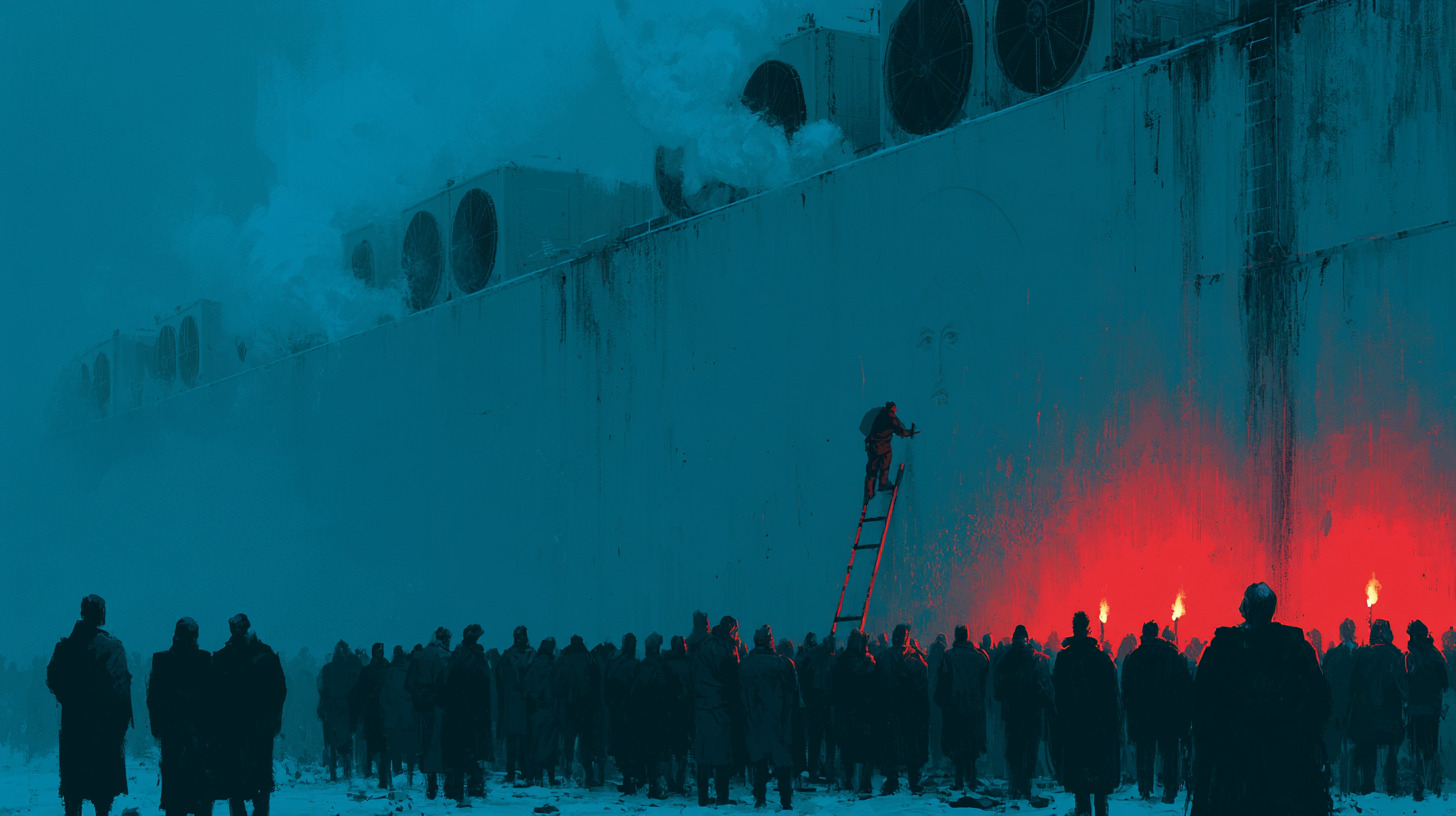
The Refusers Have a Name Now
The other tine is already awake, organized, in the street. Before the chapter argues a single fork, the ones saying no get their name.
The name arrives
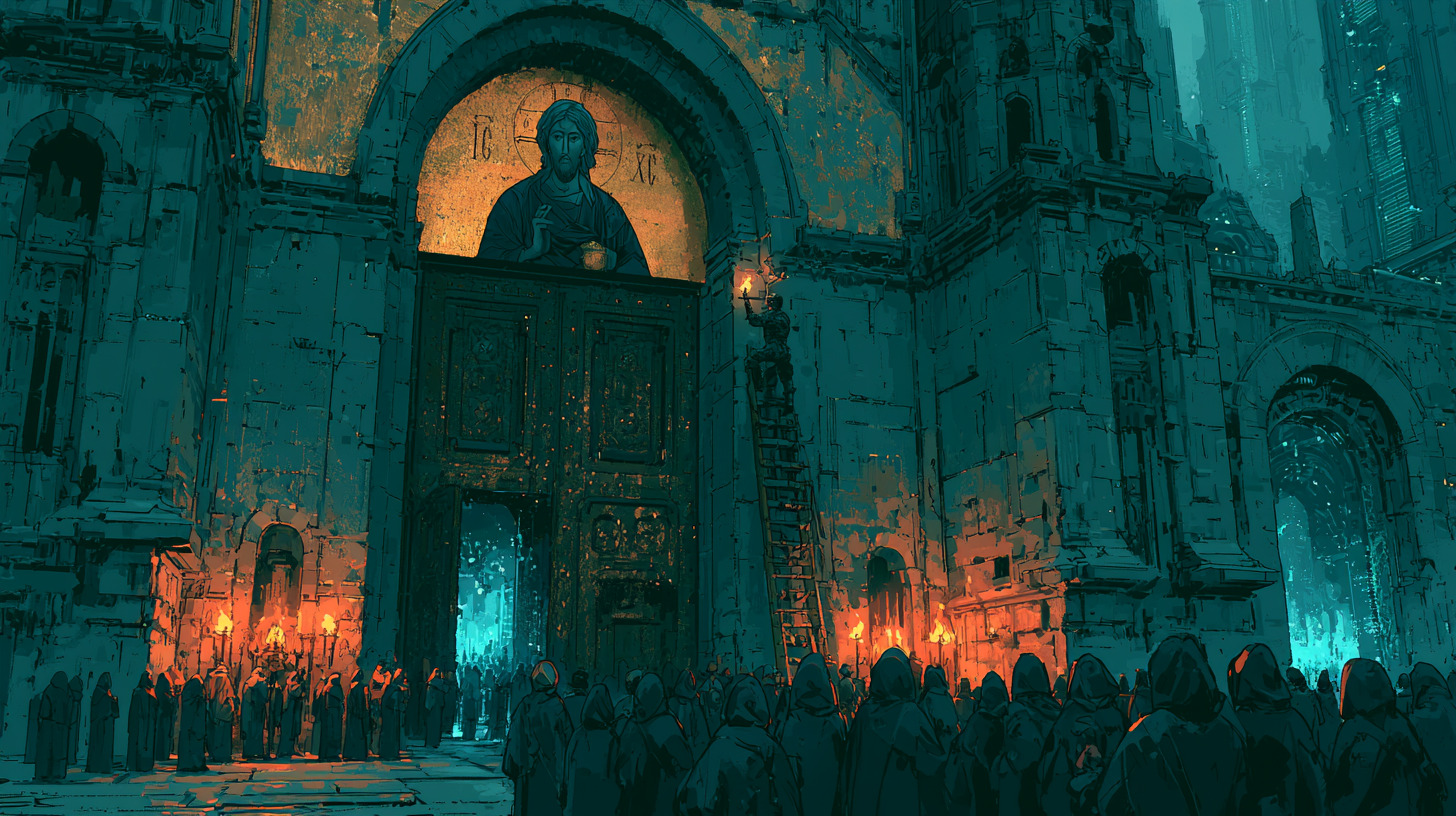
For a long time the people who said no did not have a name, and so they were not yet a people.
They were cranks, holdouts, the ones who would come around. You could dismiss them one at a time because one at a time is all they were, a scatter of refusals with no shared word to gather under. Then, the way it always happens, they found the name. A shared name is a shared tongue, and a shared tongue is how a scatter becomes a nation. This chapter is about a fork in the human species, and the other tine is already awake, already organized, already in the street. If I let you assume everyone will say yes, the chapter is a brochure. So let me start with the ones saying no.
The chisel and the crowd
But first, a cold morning in Constantinople, twelve hundred years ago.
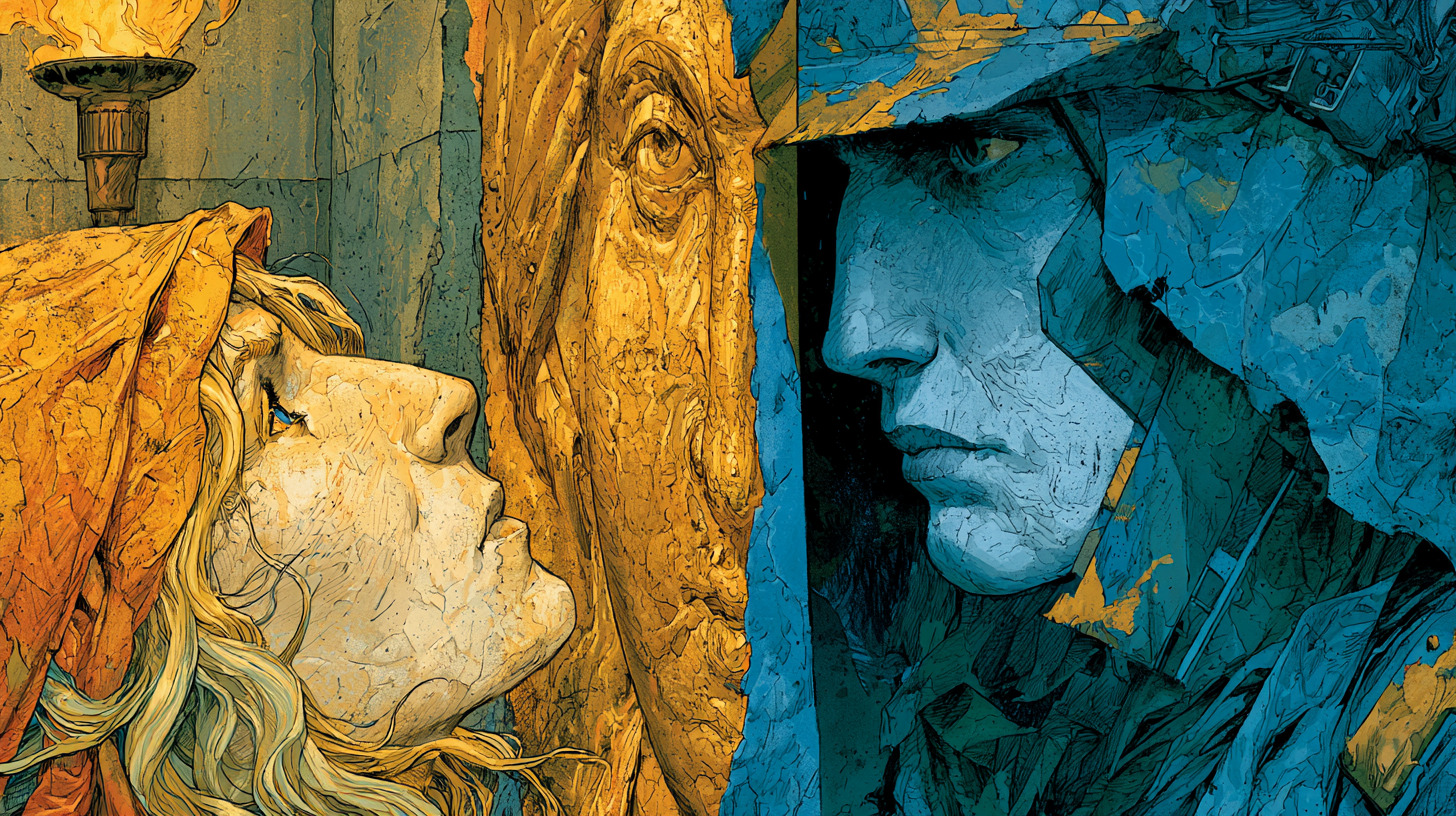
A soldier stands on a ladder before the great bronze gate of the palace, chisel in hand, sent to take the face of Christ off the wall. Below him, at the foot of the ladder, a crowd has gathered, mostly women, and they are not leaving. To the emperor, the image is the blasphemy: to bow to painted wood is to mistake the picture for the presence. To the women, the soldier is the blasphemy: a chisel at the face of God. The historians dispute whether this morning happened as the tradition says. Hold it lightly. What it illustrates is certainly true: two people can stand before the same made image, and one sees salvation, and the other sees the end of the world, and both are ready to die on the spot. The word for the image-breakers was iconoclast. It means, exactly, the one who breaks the image.
two people can stand before the same made image, and one sees salvation, and the other sees the end of the world
The map breaks
Now come back to this year.
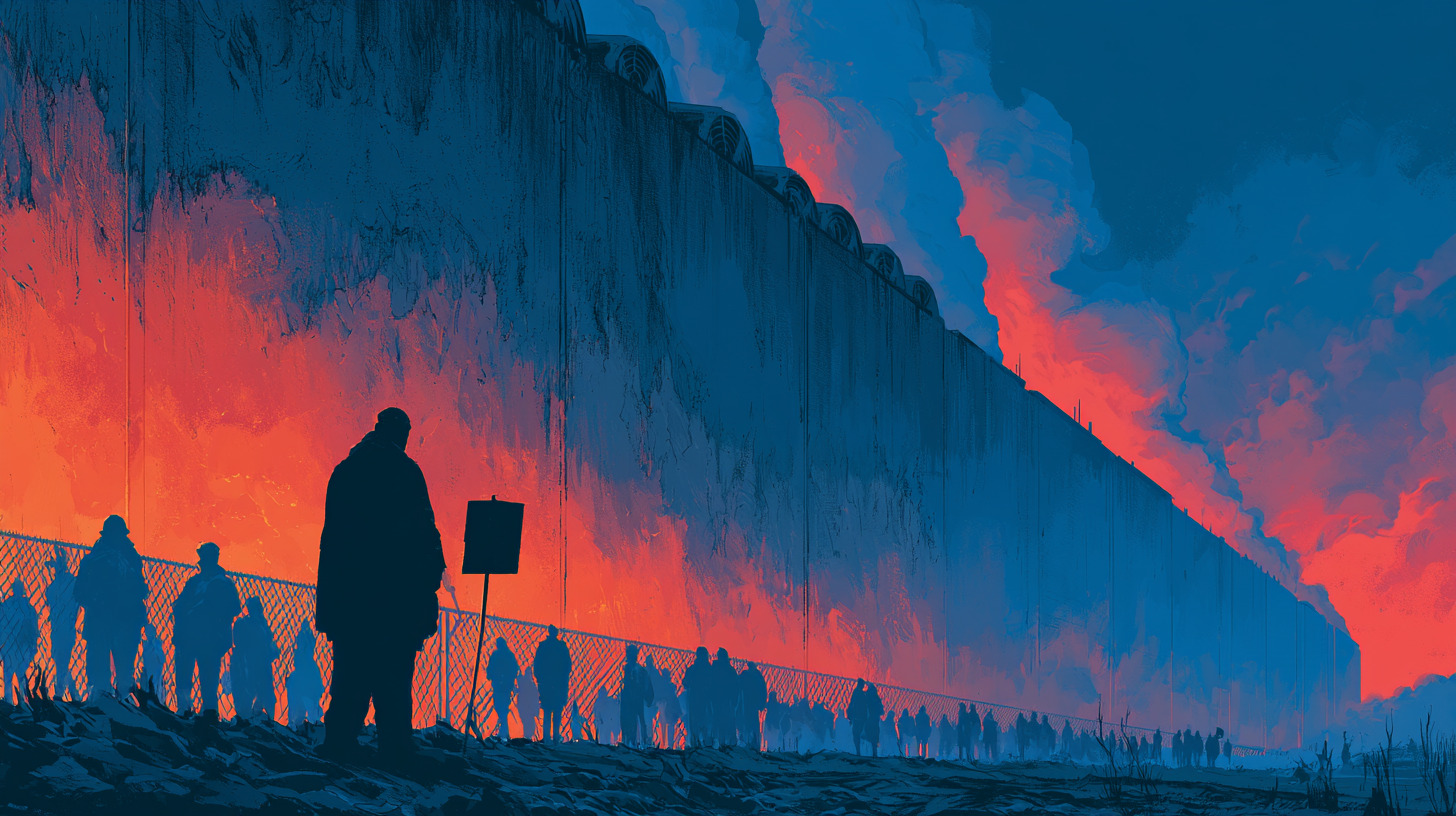
On the eighteenth of July, in 2026, a movement calling itself HumansFirst put people into the street in a hundred and forty-two places across forty-two states in a single day: the first coordinated national day of refusal against the buildout of the machines. The detail that should stop you is how hard the crowd is to sort. The movement calls itself nonpartisan, and though its organizers lean right, a former Tea Party hand among them, the refusal plainly does not stay on one side. A declaration circulated that spring: technology should serve human beings, not replace them. And the signatures under it belong together on no map we have used for a century: hard-right populists and progressive democrats, union locals and church leaders. Across the ocean, a movement out of France carries the same refusal in a harder key. These people agree about nothing else alive. They agree about this.
Why does the map break. That is the whole essay, and here is the answer.
Every refusal before this one was a refusal of an object. The machine in the factory, the loom, the press: the thing out there that took your wages or your craft. Those fights sorted the ordinary way, left and right, labor and capital, because they were about who got what. This time the object has moved. What is being built is not a better loom. It is a rewrite of the human itself, and you cannot file that under wages. When the thing being remade is the person, refusal turns theological, whether or not the refuser would ever use the word. That is why the coalition cannot be sorted. The fork does not run left and right. It runs adopter and refuser: the first political line in modern memory drawn not through the distribution of goods but through the substrate of the person. The iconoclast was guarding the boundary of the sacred. So is the man at the fence of a data center, even if he would laugh at the word sacred, even if he only knows that something he cannot name is being crossed.
Refusal compounds
I have circled this for twenty years without seeing it whole. When I was young I wrote that my generation faced the predicament of an inappropriate mythology, that we had been handed a vastness of inter-subjectivity and fluidity and no story equal to it. I thought the refuser had failed to keep up. I had it backwards. The refuser noticed, before the rest of us, the floor under all of it: shared conditions of being human so basic nobody thought to defend them, because nobody imagined they could go. To move into the new world, I once said, you may have to forget, to delete the old to make room. Some people, some whole cultures, simply refuse to delete. I used to call that weakness. It may have been the first clear sight anyone had.
So run the logic of this chapter in reverse. If adoption compounds, refusal compounds too, into a people permanently, structurally apart. The refusers are not the past being driven over by the future. They are the other tine, the other species being born in real time, and they may be the only ones naming the thing honestly, because everyone on the far side has every reason to call the split progress. The unbearable possibility is that they are right about what is happening and wrong only about whether it can be stopped. The iconoclasts lost. The images came back within a lifetime. But the women at the foot of the ladder were not wrong that something sacred was on the wall.
The iconoclasts lost. The images came back within a lifetime. But the women at the foot of the ladder were not wrong that something sacred was on the wall.
The fence at dusk
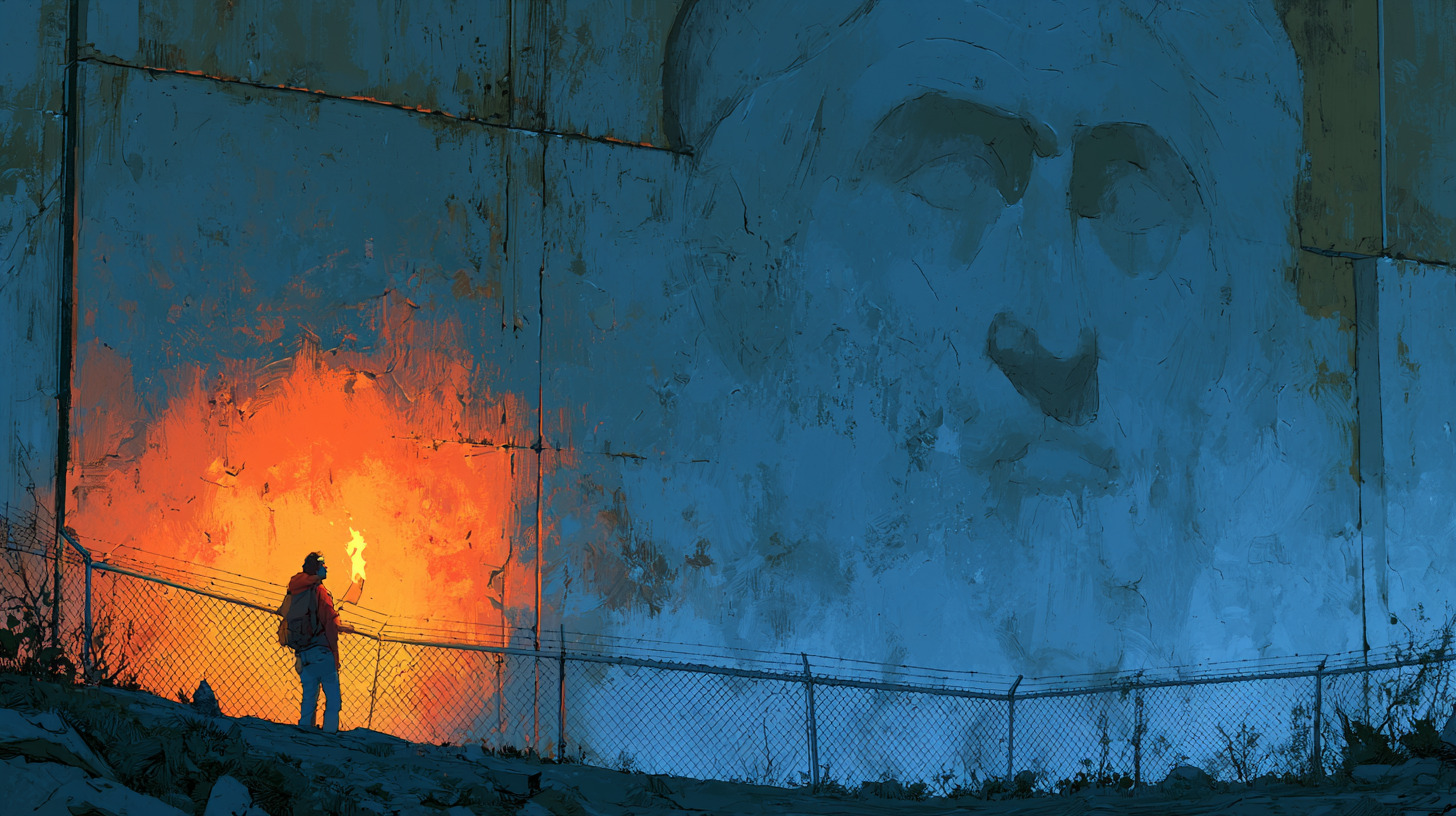
So here, at the start, is one person. Not a movement, not a declaration. A single figure at the chain-link fence of a data center at dusk, the cooling fans roaring like a held note that never resolves, holding a sign that will not stop one machine from being built. Not a fool and not a winner. Someone standing at a boundary they can feel in the body and cannot prove on paper, the way the women could feel it, looking up at the chisel.
The fork is real because both sides are real. That is where the chapter begins.
The fork is real because both sides are real.