The Choice Made for the Unborn
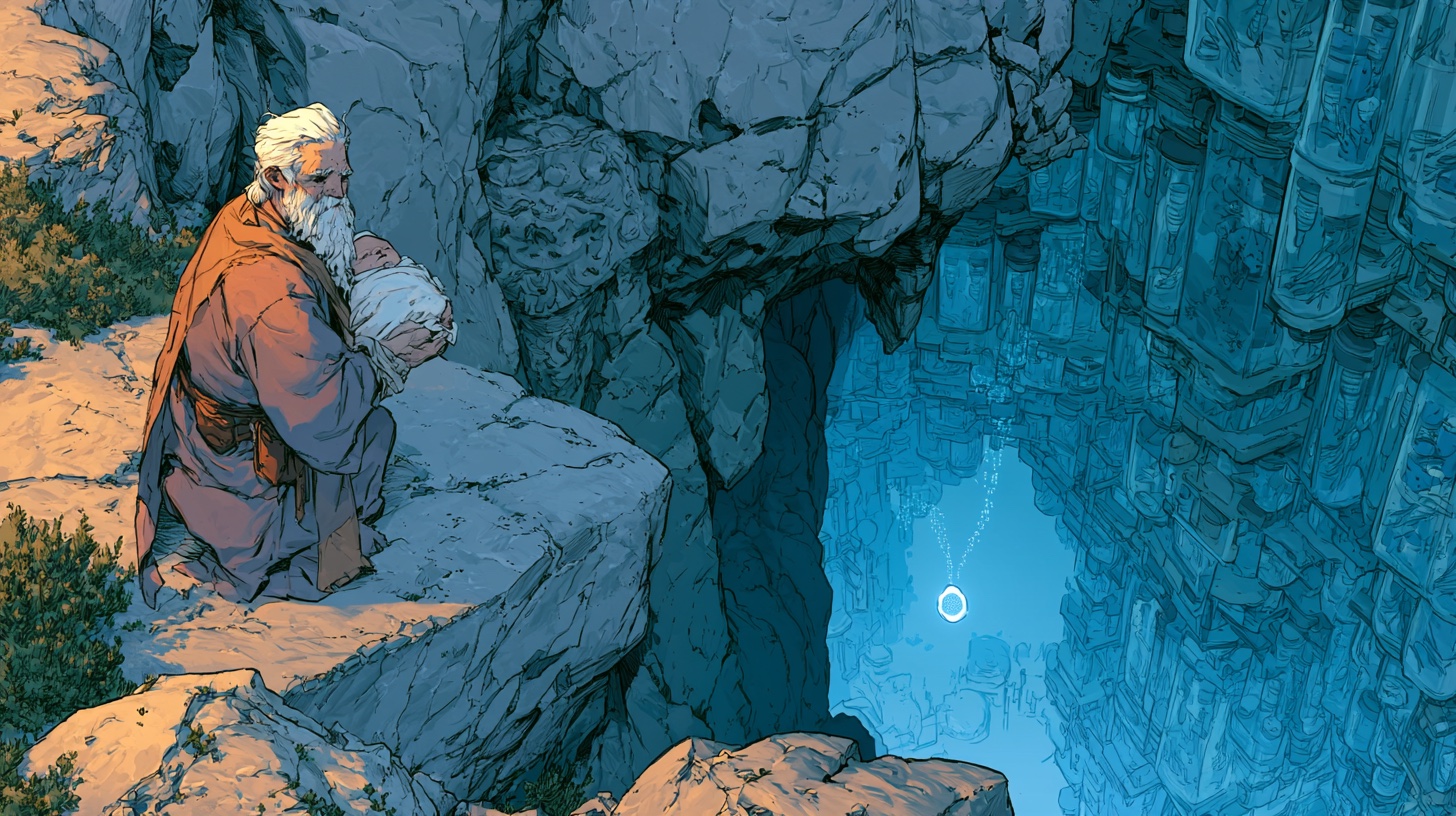
Sparta judged the born at the edge of a cliff. The new power drafts the unborn in a lab. The moral floor of the chapter, stated without raising the voice.
The place of laying away
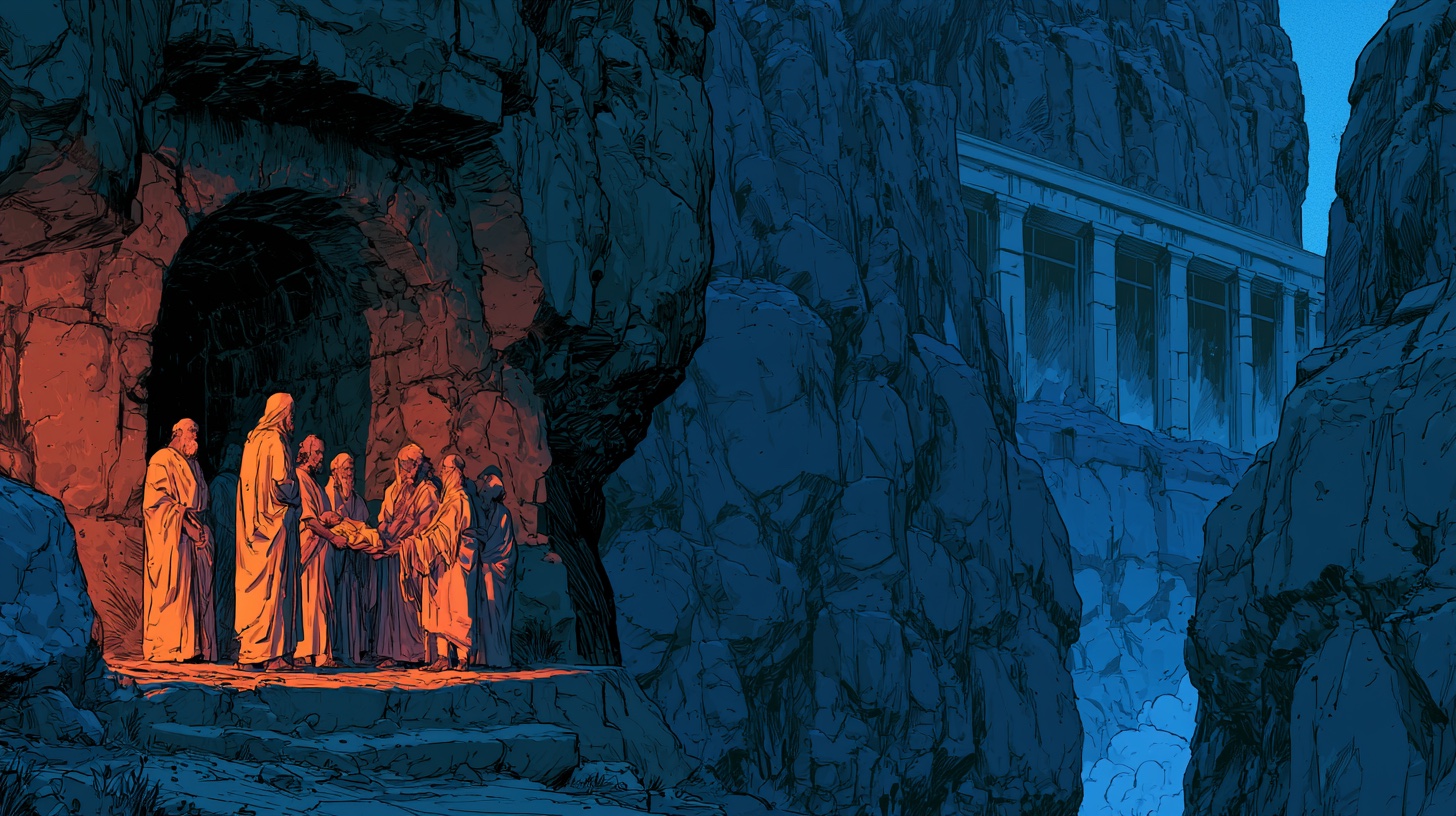
At the foot of a mountain in the south of Greece there was said to be a place where the choice was made.
The Spartans called it the Apothetae, the place of laying away. The story, and it is a story, is that when a child was born the elders looked at it and decided. A strong child was kept. A weak one was carried to the chasm and left. The history is contested. It comes to us mostly through Plutarch, writing centuries late, and when archaeologists went to the pit the tradition named, they found the bones of adults, not infants. So do not take it as fact. Take it as the founding story a civilization told about itself, which is often truer than its facts. The story says: the state stood at the edge of a life and decided whether it was permitted.
The book drafted
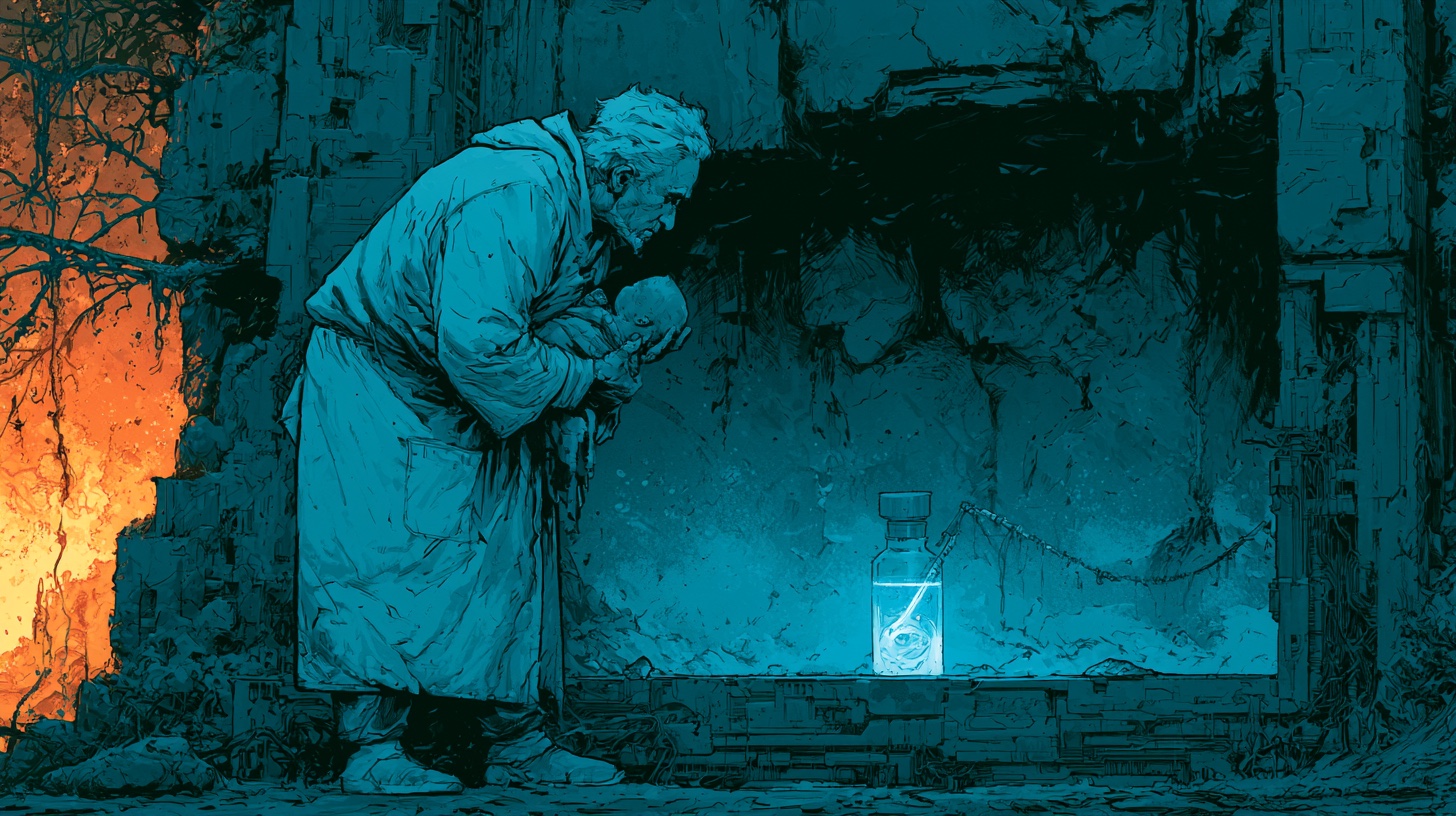
We did not abolish that power. We moved it. From the cliff to the laboratory, and earlier: from the child crying in the elder's hands to the cell before there is a child at all. The Apothetae looked at what had been born and discarded it. We look at what has not yet been born and rewrite it. The old power culled the book after it was printed. The new power drafts it. Same authority, deciding which humans are permitted, moved upstream to a place where no one can see it happen and no one cries.
One distinction carries the whole weight. The essay before this stopped with a single body. Edit your own genes as an adult and the edit lives and dies with you. Germline editing is another thing entirely. It changes the cell that becomes the child, which means every cell the child is built from, which means the children that child will have, and theirs, down a line with no visible end. It does not stop with a body. It becomes the species. That is the line no other technology in this chapter crosses. The one edit that is both irreversible and inherited.
And it has been crossed already, once, in humans. In 2018 a scientist in China announced that twin girls had been born from embryos he had edited, targeting a gene for resistance to HIV. He went to prison for three years. He was released, relocated, and is reportedly floating new proposals: embryos edited against Alzheimer's. His results were never independently verified, and that is the more frightening truth: we do not fully know what was done to those children, and they will carry it, and pass it on, regardless. The world answered with condemnation, a moratorium, advisory frameworks from the health bodies. But a moratorium is a promise, and the chapter has shown what promises are worth in a race with no referee. The technology will go where the line is crossable, and the places where it is crossable first often have the least power to refuse on behalf of their own. The question was never whether. Only when, and where, and to whom.
The old power culled the book after it was printed. The new power drafts it.

The mercy ends
Now the moral center, stated without raising my voice. It does not need one.
Every other fork in this chapter is a choice a person makes about themselves. Even the gravest (the man buying a new sense, the woman rewriting her own body) is the choice of the one who will live inside it. There is a consenting adult in the room. Here there is not. The person the choice is made for does not exist yet, and by the time they exist the choice is inside every cell of them, and they will never be asked, and neither will anyone descended from them. You are authoring the first chapter of a life that is not yours to write, and calling it a gift. The deepest thing I believe about a human being is that its dignity is authorship, the slow terrible freedom of writing your own story out of the fluctuation between what you were given and what you choose. Germline editing reaches back before the first word and writes the opening for someone else. It edits another person's free will at the root, before the root.
Run the four turns one last time, because this is where one breaks. Designed, not grown, now at the level of the species. Elective, therefore priced, therefore sorted. Divergent, two edited lineages drifting apart down the generations: not a metaphor for speciation but its literal mechanism. And the fourth turn, the one that held a small mercy through every essay until this one. Single-lifespan. Until now every change we made, however radical, was worn by one body and buried with it. The gap could not outlive the person. Germline removes that mercy. The advantage compounds across the generations, and the two kinds of human do not just diverge. They inherit their divergence. Here the fork stops being something a person does and becomes something a person is born as.
Until now every change we made, however radical, was worn by one body and buried with it.
The floor
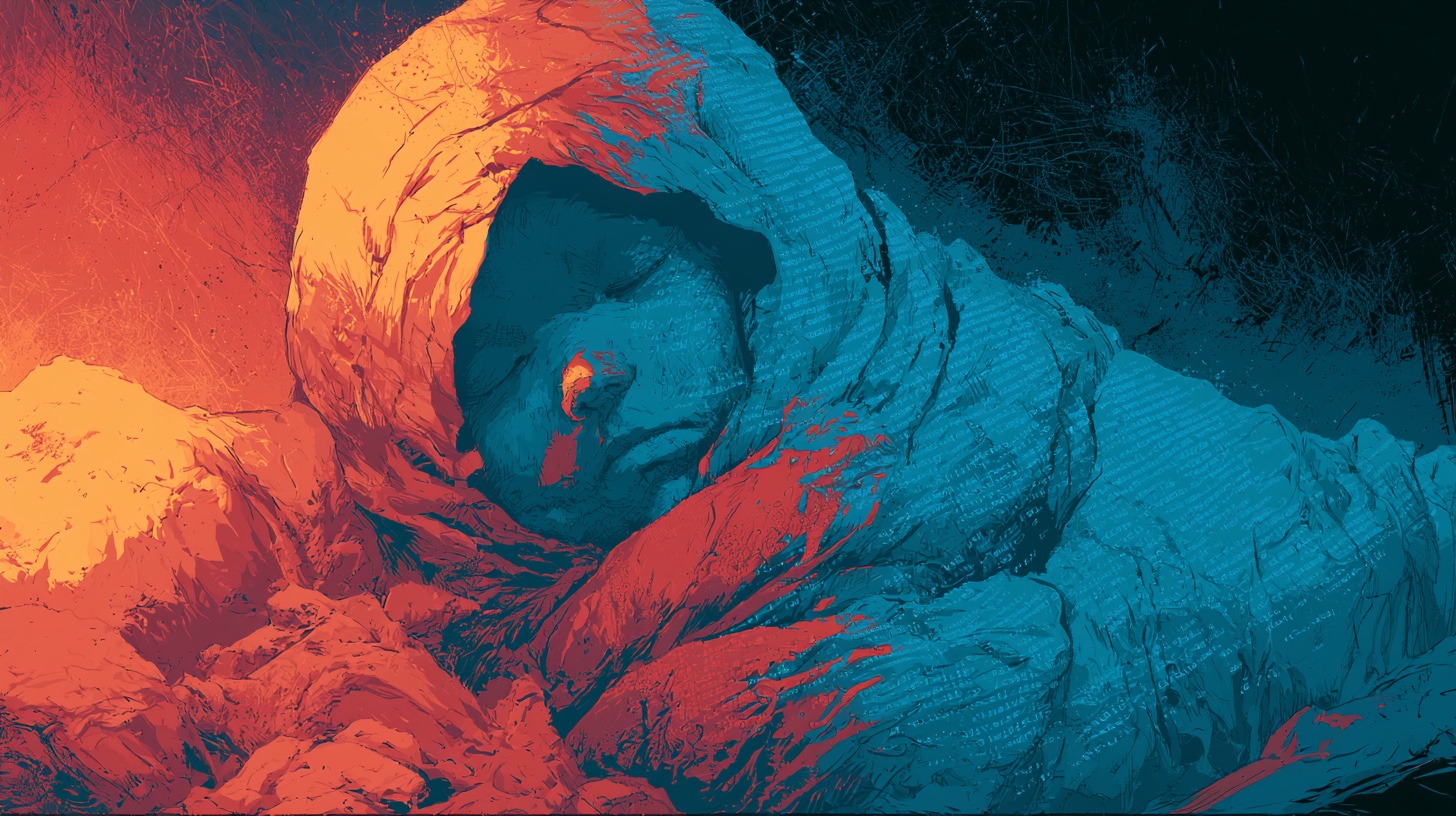
That is the floor. Not because augmentation is evil, not because the child would be unloved. Because consent cannot cross the threshold of birth, and this is the first place in the chapter where the choice is made by one person, permanently, for another who cannot answer. Everything before this was a person deciding about their own life. Everything after this is aftermath. The species either has the wisdom to leave this one page unwritten, or it does not, and we are about to find out which.
Having asked whether we may remake the human, the chapter turns to a quieter, stranger question. Once the machines do the work survival used to demand of us, what, exactly, is a human for.
consent cannot cross the threshold of birth