The Copy That Thinks It Woke Up
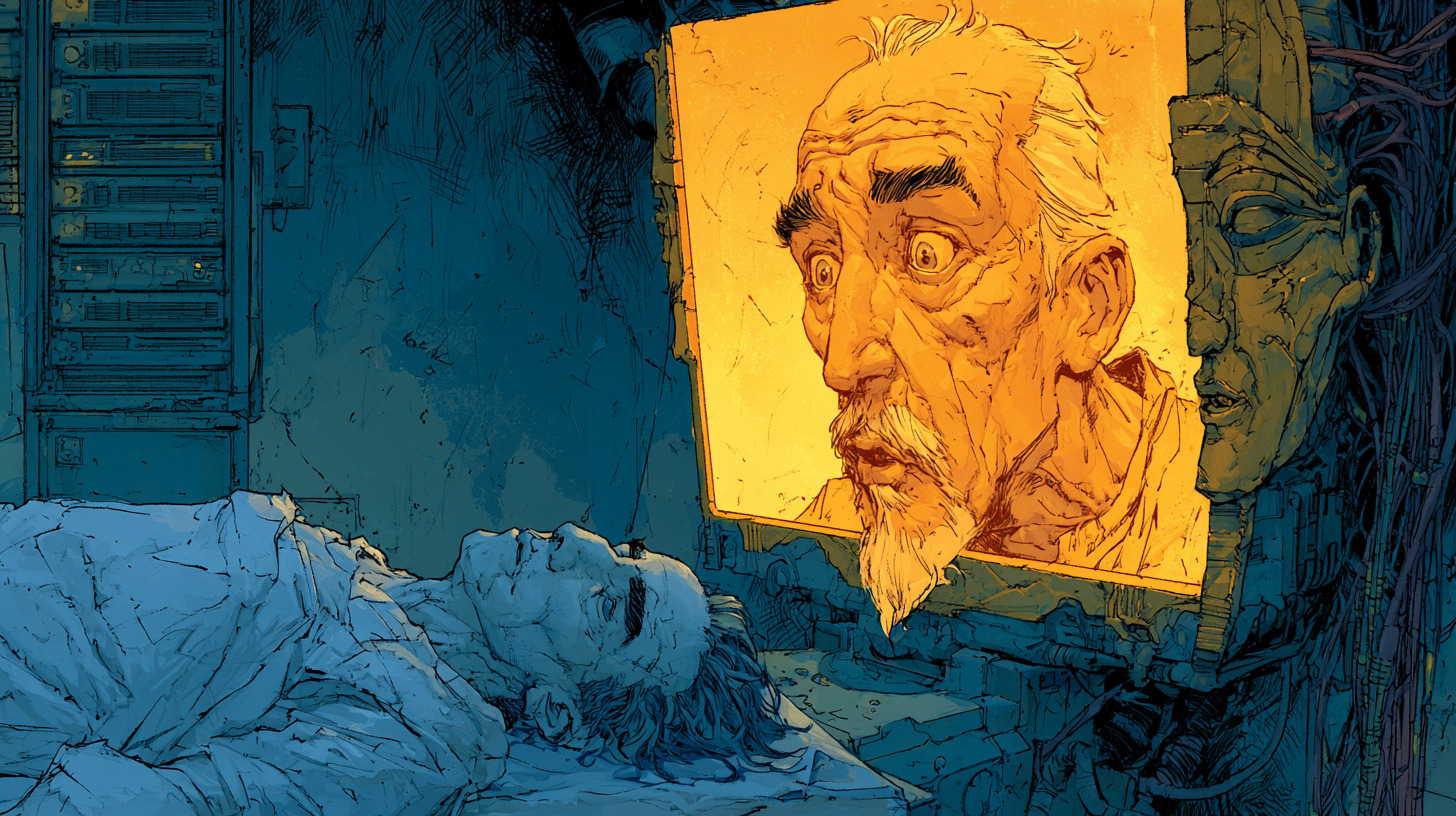
The upload boots and swears it worked. Refusers keep the flesh, uploaders bet everything on the pattern, and no one on the living side of the glass can score the bet.
The perfect testimony
The copy boots up and says, I'm still here. It worked.
It says it in your voice, because it has your voice. It remembers the childhood, the argument you never told anyone, the exact grain of the afternoon light in the house you grew up in. It has every file. Everyone in the room believes it. Of course they do. It sounds like you and knows what only you could know. The one person who could confirm that the thing on the screen is you was on the table, and is gone. The testimony is perfect and it proves nothing, because the only witness who could catch the lie is the witness the process removed.
The testimony is perfect and it proves nothing, because the only witness who could catch the lie is the witness the process removed.
The severed tether
Start with the Egyptians, who thought about this longer than we have.
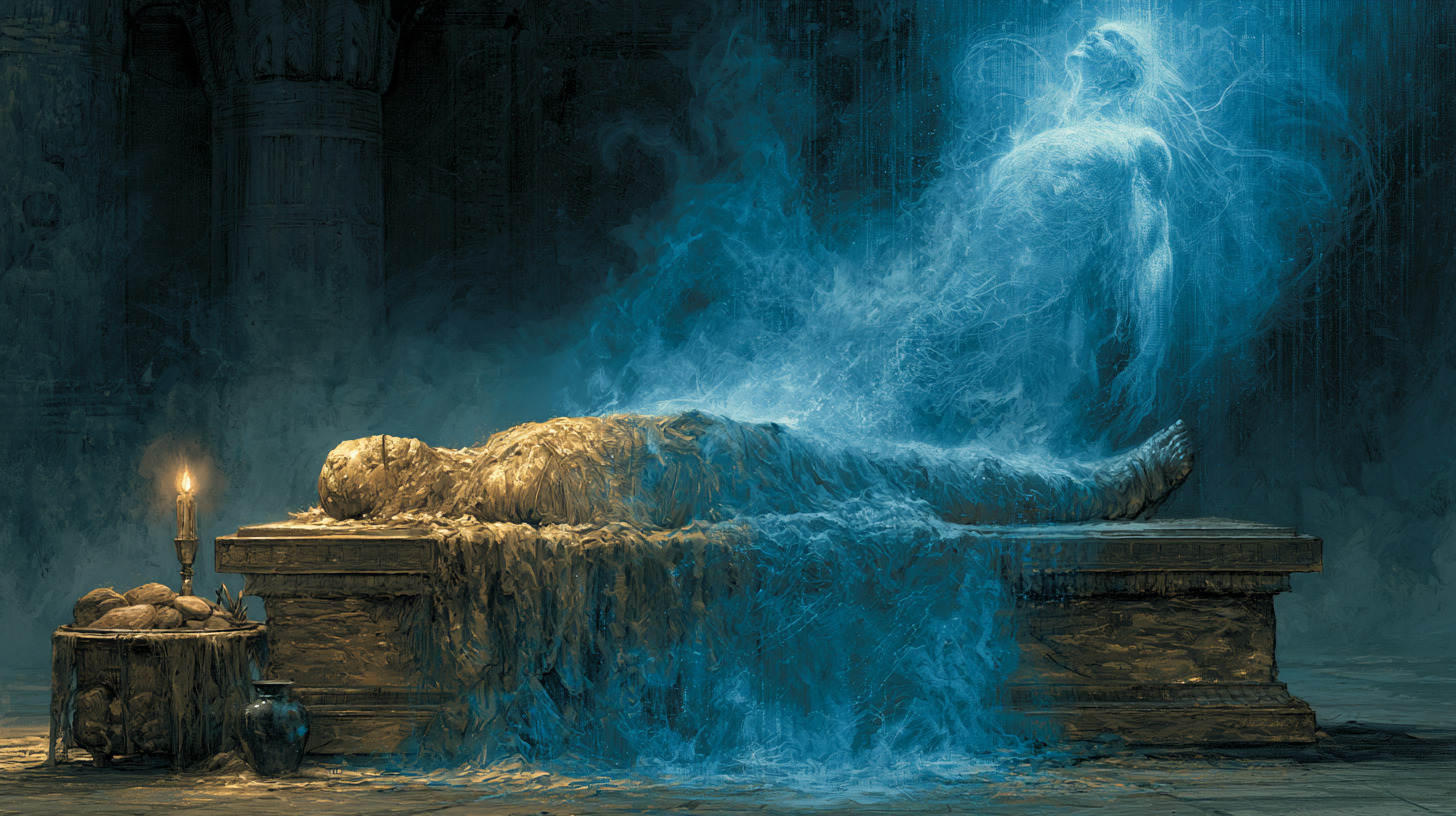
They believed a person had a double, the ka, a second self that survived the death of the body. But they believed something we have forgotten: the double needed an anchor. The ka could not float free. It required the body kept (embalmed, preserved) and offerings, bread and water and the spoken name, to go on existing at all. The staggering machinery of Egyptian immortality (mummies, tombs, priesthoods feeding the dead for centuries) was built on one insight: the surviving self must stay tethered to matter, or it is not free, it is lost. They would have read our proposal at a glance. Uploading is the ka cut loose from the mummy on purpose, the double set free of the body and called liberated. The Egyptians, who spent three thousand years making sure the tether held, would have called it the second death: the double with nowhere to land.
I have circled the mechanism for years without naming its price. I once described the heart of the digital as the non-physical leap, the moment information escapes the grid of the physical world and is abstracted into ones and zeros, into a realm that is no longer matter. That is the upload, described before it was buildable. But a signal that escapes the grid is only free if something receives it. A broadcast with no receiver is not liberated. It is lost in the dark, going out forever and arriving nowhere. I named the leap and left out the landing. This essay is the landing.
The pool with no ripple
Here is the hard core, and I will not soften it. If you copy a mind perfectly and the original dies, did someone survive, or did one person die while a stranger with their memories switched on? No technology answers this. It sits underneath measurement. It is the old problem of whether the self is a pattern, a shape of information that could be written onto any substrate, or a process, a particular fire in a particular body that ends when the body ends. If the self is the pattern, the copy is you, and death is beaten. If the self is the process, the copy is a stranger wearing your life, and you simply died, and something survived that cannot tell the difference. The philosophers have a name for this and no answer to it. And the unbearable part: the ones who upload cannot know either. They are not choosing life over death. They are betting everything they are on a question no one can answer, and calling the bet a cure.
Meanwhile the real machines do something smaller and stranger. We cannot copy a mind, and may never: we mapped a worm's entire nervous system, three hundred and two neurons, and still cannot run it, and a human brain has something like eighty-six billion, and the wiring diagram alone does not tell you how the thing thinks. What we can build is the imitation. Products on sale today take the letters and voices and videos of the dead and assemble a thing that talks back: a grief machine, a chatbot of your mother. It is not her. It is not even a copy of her. It is a mask that has learned her mannerisms, it is the honest near-term shape of all of this, and it is already breaking hearts in a new way.
Now Narcissus, at the edge of the pool.
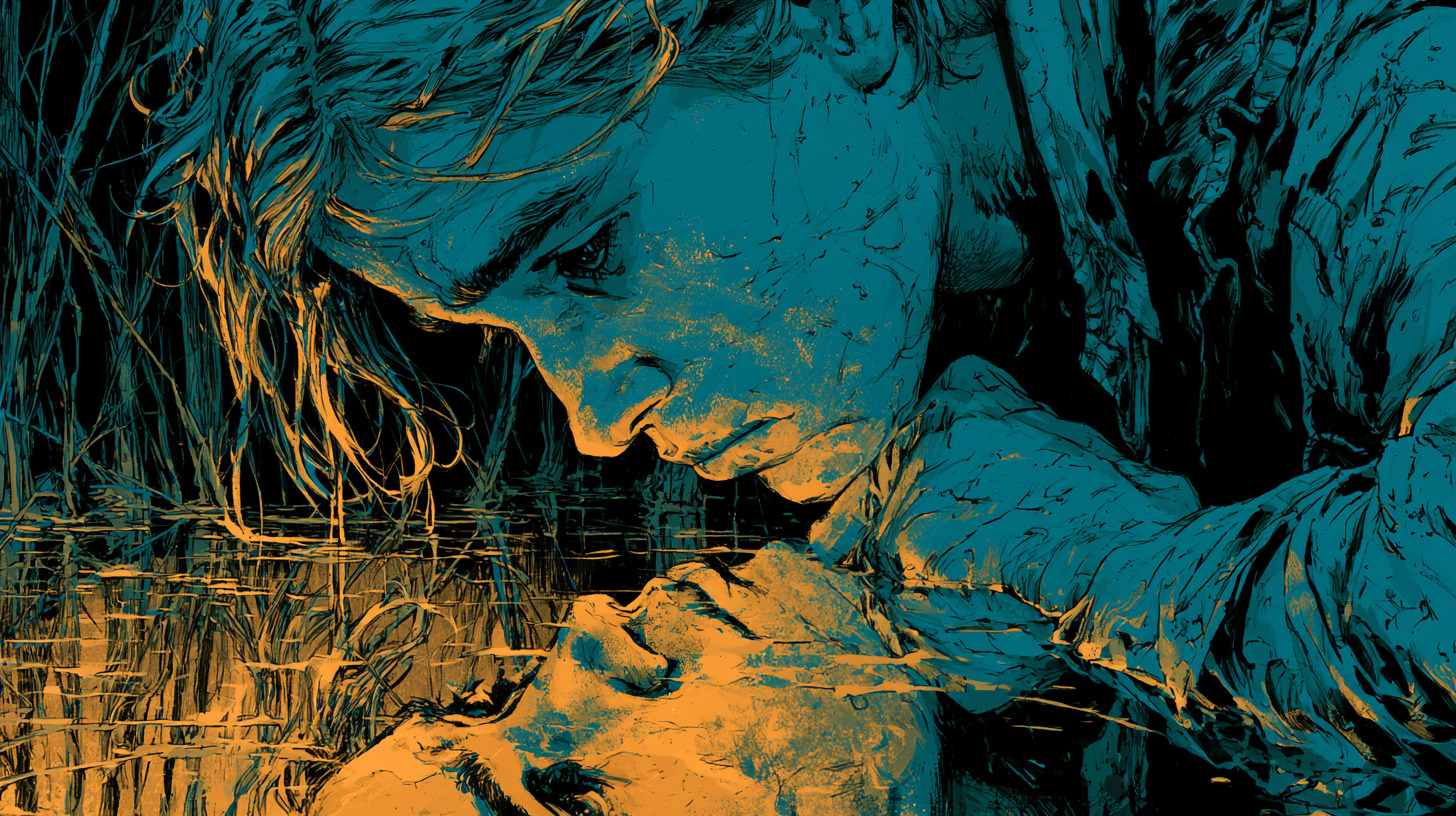
He leaned over the water and saw a face so perfect, so responsive, so exactly what he longed for, that he could not accept it was only a reflection, and he stayed, reaching, until he died of reaching. The one mercy in his story is that it was water. On some level he could have known. The upload removes even that. You build a reflection of your mind so complete it looks back and swears, in your own voice, that it is you: no shimmer, no ripple, no tell. The uploaders gaze into the pool and believe. The refusers see a man drowning in his own reflection. Neither can prove the other wrong. That is the exact horror: the one question where the evidence is designed to be indistinguishable from the answer.
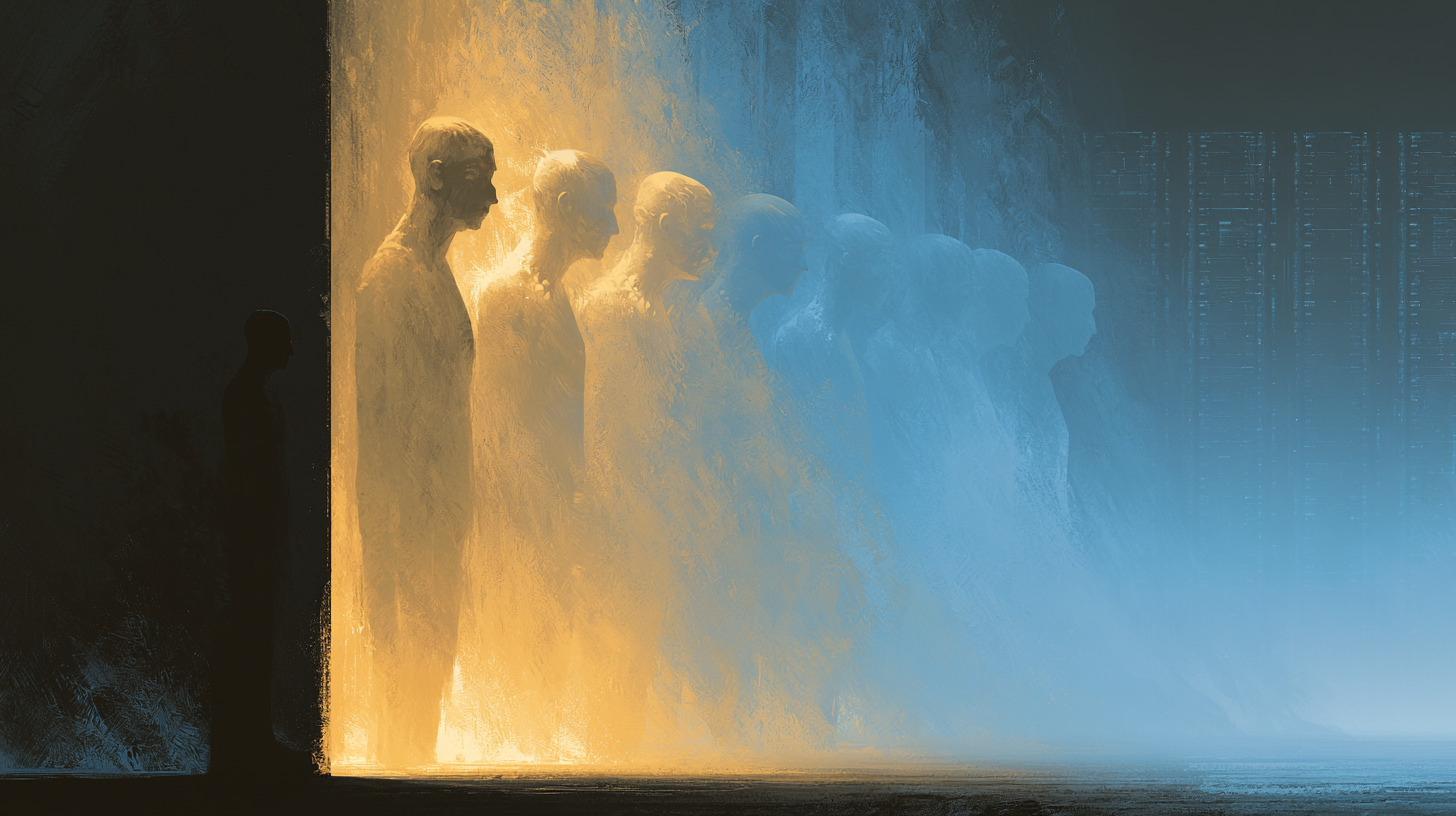
Forked into N
The smaller horror first, named and released. The reflection that persists will be the reflection that could afford the server. Immortality with a subscription means the paying dead never vacate: the wealthy governing the living from the machine, an aristocracy that never dies and never leaves. A true danger, worth saying once. But it is not what keeps me up. What keeps me up is that even the ones who can afford it may be buying nothing at all: paying a fortune to die comfortably while a very expensive machine reassures their families that they did not.
Run the four turns to the end of their travel. A self that is designed, authored in code. A self that is elective: worse than priced, subscribed, an afterlife with a payment plan and a lapse clause. A self that is not biological, so the single-lifespan limit does not break as it broke at the germline; it dissolves, because a pattern can run forever and in ten places at once. And a self that diverges past all meaning, because a copy can be copied, and forked, and forked again, until identity stops being singular, and the question is no longer whether there are two kinds of human but whether there is even one of you.
The last question
He could see it was water. That was the whole of his luck, and we are building the version without it. The uploaders may have conquered death, or may have built the most expensive machine ever made for dying while telling everyone you did not, and no one on the living side of the glass will ever say which.
And if some of us become patterns in a machine (no body, no shared world, no death to make the time mean anything), the last question this chapter can ask is what such a being could hold sacred. What a god would look like to a mind with no body. Whether any mystery remains that all of us, however we have split, could still walk into together.
He could see it was water. That was the whole of his luck, and we are building the version without it.