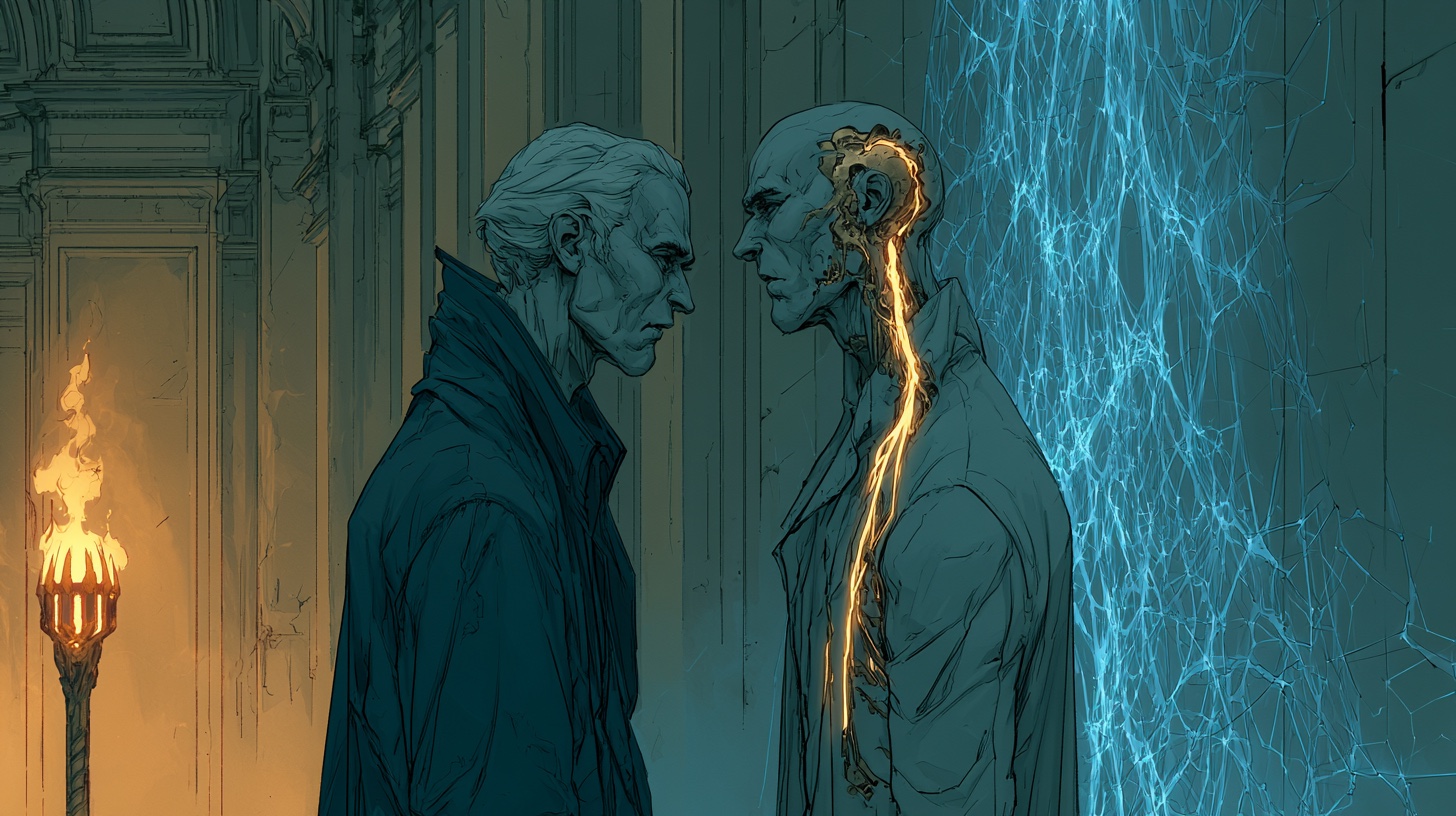
The Ear That Hears a Different Room
A cochlear implant does not give back the lost room. It translates a new one. Two people stand side by side and the room is not one room.

One of us heard it
There were two of us in the room and only one of us heard it.
He tipped his head toward the far wall, the small automatic turn a person makes toward a sound, and I looked where he looked and there was nothing. No sound had happened. Not for me. For him a sound had crossed the room and his body had answered it the way bodies answer, before thought. I asked what it was. He said the building, a frequency the walls were making, one I had no word for because I had never been given the sound to hang the word on.
He had an implant. Small, early, medical, nothing anyone would call augmentation yet. But he had heard a room I was not standing in, while standing in it beside me, and I have not been able to put that down since.
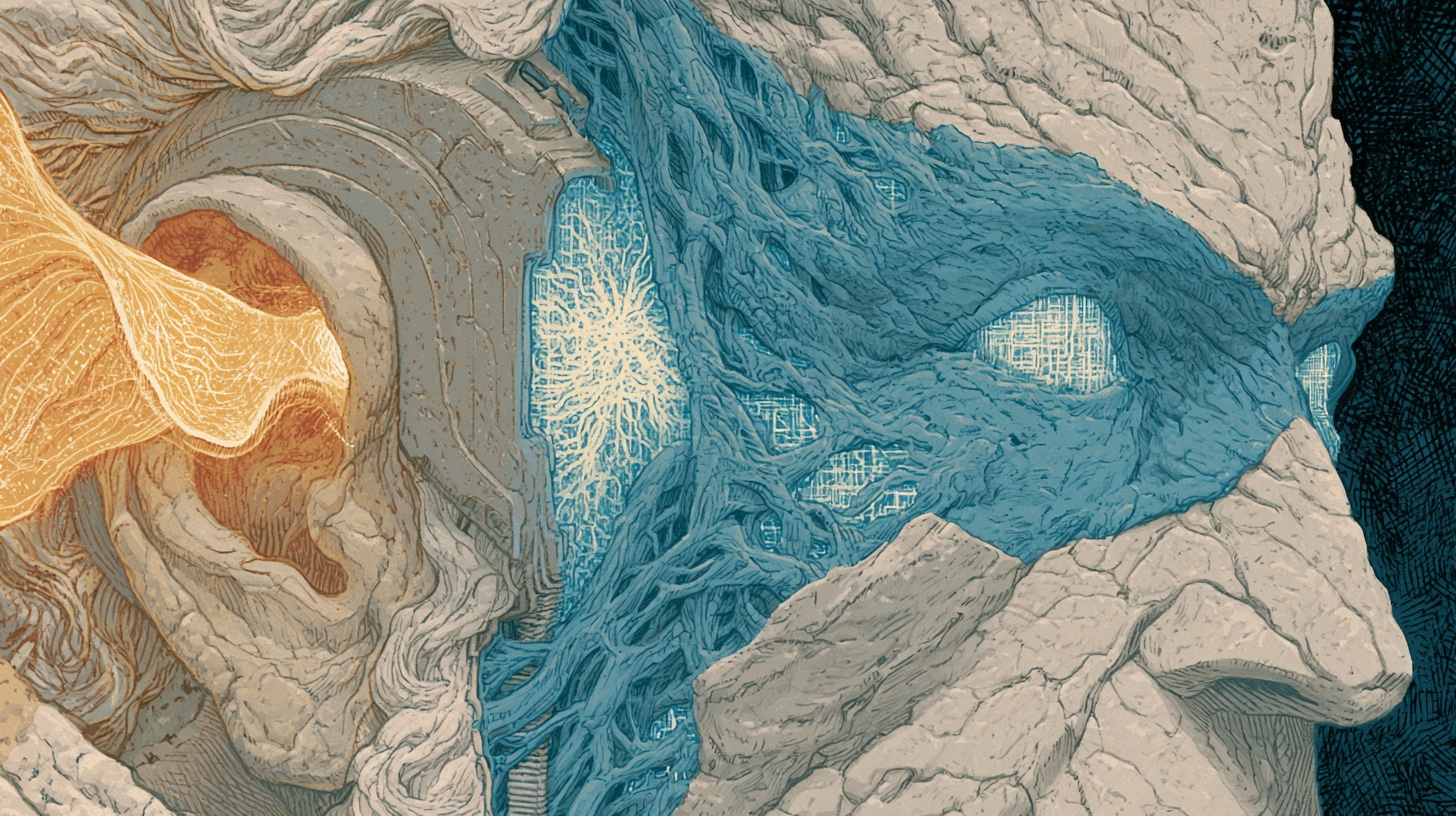
A translation, not a repair
Start with what is already true, because it is stranger than the future. A cochlear implant does not give a deaf person back the hearing the rest of us have. It cannot. It takes sound, turns it into a code of electrical pulses fired straight at the nerve, and the brain learns to read that code as a world. People who have it do not describe our sound. They describe a different sound that means the same things. The ear that hears a different room is not a prediction. It is sitting in clinics now, and it works. Some in the Deaf world decline it for exactly this reason. They see what it is: not a repair, a translation, and a translation is a different language.
Hold that. It is the whole hinge. Now let it widen.
not a repair, a translation, and a translation is a different language

New letters
A device that can hand you a sense does not have to hand back the one you lost. It can hand you one the species never had. Retinal implants are turning light into pulses for eyes that stopped seeing, the newest under review in Europe as I write. Brain-computer interfaces are a race now, and the leader is not the one you have heard of. The American programs, Neuralink and Synchron, are counted in dozens of people. A Chinese state-backed program crossed the same line this summer and is moving toward hundreds by year's end. Regulate it in one capital and it changes address. This is a race with no referee, and the prize is the inside of the human head.
Everything so far is repair. Repair is the doorway, not the room. Once the channel is built, the question is not whether it can give back the ear. It is what else you can pour through it. Infrared, so you see heat in the dark the way a snake reads a warm body across a field. Ultrasound, the bat's sky. A magnetic sense, so north is a thing you feel and not a thing you check. A dog's nose, which does not smell more than yours but reads a whole layer of the world as standing information (who passed, how long ago, in what fear), a paragraph written in the air that to you is simply not there. These are not additions to the human world. Each is a different world, admitted through a new letter the body was never issued.
The Greeks made a figure for this and set him on the shore of Crete. Talos, a giant of bronze, not born but forged, a single vein running from neck to ankle and one nail holding the ichor in. He walked the coast three times a day and saw the ships before any human eye could. The old story cannot help asking what this essay asks: was he alive, or a made thing that only moved like something alive. A body with a sense the rest of them lacked is already halfway to another kind of creature. We are fitting that vein to ourselves, a nail at a time, and calling it a hearing aid.

The bubble of water
The old idea underneath, kept short. It is not the point of this essay, only its floor. We are, each of us, a bubble of water with a light inside. That is nearly all we are: water, and a small electric light we call being awake. The only world we ever get is the narrow band our particular bubble is built to let in. Everything else (the infrared, the ultrasound, the north) is out there now, pressing on the skin of the bubble. Augmentation does one plain thing. It widens the opening. It changes which of the world gets in.
Which is where the trouble is, and it is quiet. Run the four turns. A sense like this is designed, not grown; someone drew it, someone shipped it. Elective, not universal, which means priced, which means sorted: a miracle in one country, simply absent across most of the map. Worn, not inherited, for now: one body's choice and no further. And it does not spread the way tools spread, out and down until everyone stands on the same floor. It compounds. The augmented perceive more, build more from what they perceive, augment further from what they build. The distance between the two kinds of eye does not close. It opens.
The tree in the forest was never a question about the tree.
Leave that there. It has somewhere to be later.
The tree in the forest was never a question about the tree.
Not one room
Because the thing I cannot put down is not the technology. It is the two of us in the room. For all of human time we could argue about whether a sound was real, whether a colour was that colour, because we were arguing with roughly the same instrument. Near enough the same eyes. Near enough the same ears. The shared bubble was the reason the argument could be had at all. He turned his head toward a sound that, for me, had not happened, and he was not mistaken and I was not deaf. We were two instruments now, in one room, and the room was not one room.
And that is one body, choosing for itself, wearing the new sense and taking it off. The next question is worse, and it is not mine to open here. What happens when the sense is not chosen by the one who carries it. When the letter is added to someone who cannot yet say no, who will never know the unaugmented world well enough to miss it, chosen for before they are born.
That door is the floor of this whole chapter, and it opens next.
We were two instruments now, in one room, and the room was not one room.